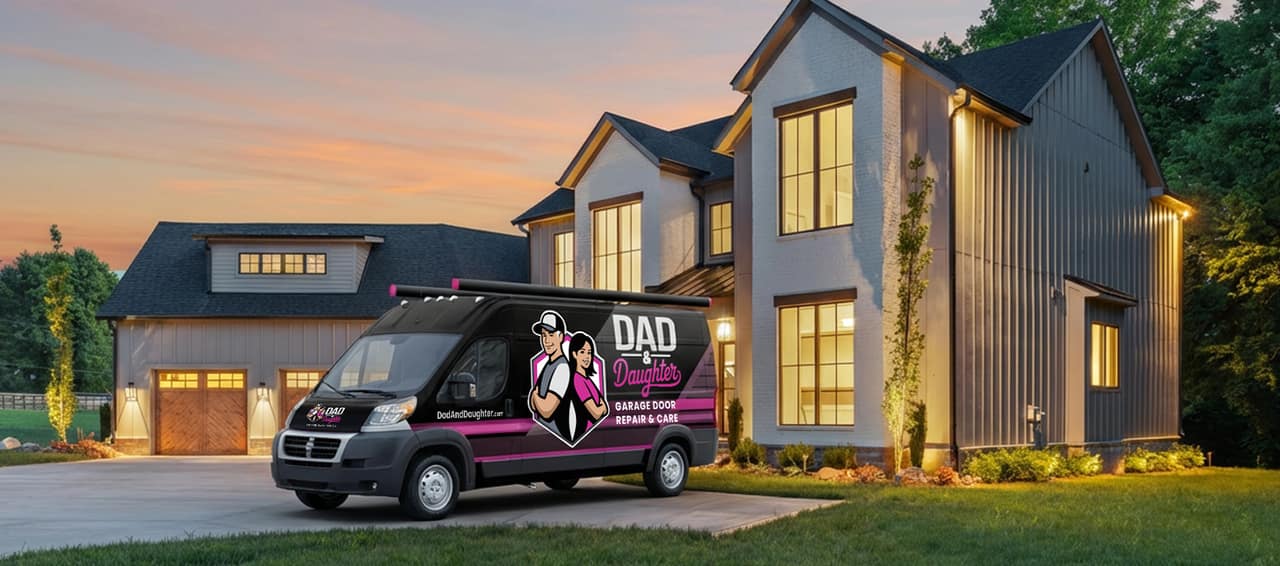
Matching New Garage Doors to Mid-Century Modern Homes in East Nashville
Dad And Daughter Garage Door Service

Your garage makes up nearly 40 percent of your home's facade. Choosing between flush-panel and narrow-window styles is the critical decision that anchors your mid-century renovation.
The 40% Facade Rule: Anchoring Your Mid-Century Renovation
Nearly 40 percent of a home's front facade is typically consumed by the garage, making the process of matching new garage doors to mid-century modern homes in East Nashville a critical architectural decision. Most homeowners spend months obsessing over the perfect exterior paint colors, the right breeze-block patterns, and period-accurate front entryways, only to leave the largest visual plane on the house as an afterthought. When you are replacing a failing, dented, or stylistically mismatched door, the stakes are incredibly high. The wrong choice completely derails an otherwise perfect exterior update, ruining the authentic, clean horizontal lines that define the era's architecture.
The concrete challenge: You are faced with a significant decision point to properly anchor the aesthetic of your property. Do you lean into a completely seamless, flat surface, or do you integrate asymmetrical glass to break up the visual weight? Choosing between flush-panel and narrow-window styles dictates how the rest of your home is perceived from the curb. A poorly selected door pulls the eye away from your home's architectural strengths, while a meticulously chosen design integrates flawlessly into the surrounding structure.
The architectural impact: Mid-century modern (MCM) homes rely heavily on proportion and restraint. Because the garage occupies such a massive percentage of the visual real estate, it must act as a cohesive extension of the exterior walls rather than a separate, distracting element. For homeowners navigating this process, exploring comprehensive garage door solutions is the first step toward preserving your property's historic integrity.
Why Traditional Styles Disrupt Mid-Century Aesthetics
To understand what works on a mid-century home, you first have to understand the architectural theory behind the design. Mid-century modern architecture is defined by its emphasis on horizontal lines, flat planes, and a deep connection to the natural surroundings. The homes are built to look grounded, elongated, and intentionally minimalist. This structural philosophy is exactly why traditional door styles fail so spectacularly in this context.
The carriage-house clash: A very common pattern we see is homeowners installing traditional carriage-house styles on an MCM property. Carriage doors feature vertical beadboard lines, crossbuck overlays, and decorative iron hinges. These elements introduce heavy verticality and rustic ornamentation into a space that demands horizontal flow and absolute simplicity. The decorative hardware creates visual clutter, fighting against the minimalist intent of the home's original architect.
Heavily paneled distractions: Similarly, standard raised-panel doors feature repeating squares or short rectangles that chop up the visual space. These busy geometric patterns disrupt the smooth, sweeping lines of the house. Visual weight must be distributed evenly across the home's exterior to maintain authentic proportions. When you place a busy, highly textured door next to a sleek, flat-roofed or low-pitched structure, the garage becomes a focal point for all the wrong reasons.
Architectural integrity relies heavily on restraint and specific geometric forms. The solution lies in utilizing flush-panel and narrow-window doors that respect the era's design language. Browsing a curated garage door gallery can help you visualize how stripping away unnecessary ornamentation allows the home's true architectural beauty to take center stage.
The Case for Flush-Panel and Narrow-Window Doors
When you eliminate traditional panels and decorative hardware, you are left with the specific styles that truly honor the mid-century era. Flush-panel and narrow-window doors are not just stylistic preferences; they are historically accurate extensions of the home's original design language. These models integrate seamlessly into authentic neighborhood restorations by mirroring the exact proportions and materials used during the period.
Mastering the Flush-Panel Look
A true flush-panel door is characterized by its completely flat, unadorned surface. It mimics the flat walls of MCM design, essentially acting as a moving section of the home's siding.
- Seamless integration: The goal is to make the door disappear into the architecture. When painted to match the exterior siding, a flush panel creates an uninterrupted horizontal plane.
- Avoiding traditional framing: Authentic flush panels avoid traditional stiles (vertical framing) and rails (horizontal framing). The surface remains entirely smooth, which reinforces the minimalist aesthetic.
- Wood grain emphasis: If you opt for a wood-look finish, the flush design allows the horizontal grain of the material to stretch continuously across the facade, emphasizing the home's width.
Strategic Placement of Narrow Windows
While a solid flush panel is striking, adding narrow windows introduces a classic mid-century design element: asymmetry. Using glass strategically breaks up heavy materials and allows natural light into the space without compromising privacy.
- Stacked configurations: Narrow, rectangular windows stacked vertically down the far left or right side of the door create a striking visual balance against the horizontal lines of the house.
- Horizontal alignment: Alternatively, a single row of narrow windows placed along the top section of the door draws the eye upward, complementing low-slung rooflines.
- Minimalist hardware: If any hardware is used, it must be purely functional and highly understated—think sleek, brushed aluminum handles rather than forged iron.
| Design Element | Flush-Panel Focus | Narrow-Window Focus |
|---|---|---|
| Visual Effect | Creates a continuous, monolithic wall effect that grounds the home. | Introduces asymmetrical balance and breaks up heavy visual planes. |
| Architectural Match | Ideal for homes with highly textured siding (like brick or stone) where the door needs to remain quiet. | Perfect for homes with flat, painted siding where the garage needs a subtle focal point. |
| Light & Privacy | Maximum privacy, zero natural light transfer. | Allows controlled natural light while maintaining street-level privacy. |
| Hardware Style | Completely hidden or strictly functional bottom-lift handles. | Sleek, geometric pulls that align with the window placement. |

Navigating Middle Tennessee's Climate: Material Selection for Flat Planes
Achieving the perfect mid-century look in East Nashville requires more than just picking the right shape; it requires selecting materials that can survive the local environment. Flush-panel designs require incredibly rigid core materials to maintain their flat architectural planes. Because these doors lack the structural reinforcement of traditional stiles and rails, any bowing or warping becomes immediately, glaringly obvious.
The reality of real wood: There is a romantic idea of using authentic, solid wood to match the original materials of the 1950s and 60s. However, the harsh reality of Middle Tennessee's high summer heat and intense humidity makes solid wood a significant liability for flush designs. Throughout July and August, the air moisture fluctuates wildly. This humidity causes solid wood flush panels to expand, contract, and eventually warp. Once a flat panel bows, the crisp architectural lines are ruined, and the door begins to rub against the frame.
The composite advantage: To preserve the aesthetic, moisture-resistant faux wood composites are the optimal solution. These advanced materials provide the exact visual texture of mahogany, cedar, or walnut, but they are built around a climate-stable core. They do not absorb atmospheric moisture, meaning they remain perfectly flat regardless of how humid the East Nashville summer gets. If you are currently dealing with a warped wooden door that is fighting the tracks, scheduling a free second opinion can help you evaluate whether a composite upgrade will solve both your mechanical and aesthetic issues permanently.
Timing Your Exterior Upgrades Before Fall
The transition between seasons provides a critical window for assessing the exterior health of your property. By the time late summer arrives, the intense heat and humidity have done their absolute worst to existing exterior wood. Paint is blistering, wooden panels have swelled, and the mechanical strain on your garage system is at its peak.
The August evaluation window: August serves as the ideal time to evaluate the home's facade, especially if you are in the middle of late summer exterior renovation wrap-ups. As other exterior projects—like landscaping, driveway pouring, or fresh siding—near completion, the garage door often stands out as the final missing piece of the puzzle. Leaving a failing door in place while the rest of the home looks pristine creates a jarring visual disconnect.
Preparing for the seasonal shift: There is a strategic advantage to finalizing these upgrades before the weather turns. Installing weather-resistant composite doors now ensures your home is sealed and protected before the transition into fall and winter weather. A tightly sealed, properly insulated door prevents autumn drafts and winter chill from penetrating the garage space, which often shares walls with living areas. Completing the home's visual anchor right as the season changes provides immense satisfaction, allowing you to enjoy the finalized architectural look of your mid-century property just in time for the holidays.
Respecting Neighborhood Charm and Local Architectural Guidelines
East Nashville is experiencing an ongoing renovation boom, driven by a community that deeply values preserving authentic historical charm. Homeowners are actively working to restore properties rather than tearing them down, which means exterior updates are often heavily scrutinized by neighbors and local associations.
Navigating local expectations: Local architectural guidelines and HOA expectations frequently dictate material and style choices for exterior updates. In historic overlay districts, you cannot simply install a generic stamped-steel door without clashing with the neighborhood's established aesthetic. The community expects renovations to honor the period-specific details that make the area unique. A flush-panel or narrow-window design demonstrates a clear understanding of these local expectations.
The value of local expertise: Consulting with local architectural experts who understand these specific neighborhood nuances is vital. As a deeply rooted local, family-owned business, Dad & Daughter Garage Door Service understands the specific architectural charm, HOA expectations, and renovation trends unique to East Nashville neighborhoods. We know what styles pass architectural review and what materials hold up to the local climate. Preserving the architectural integrity of one home elevates the entire streetscape, contributing to the collective value and beauty of the neighborhood. If you are also looking at building an attached structure, reviewing garage door options for Nashville new construction can provide additional insights into matching new builds with historic aesthetics.
Balancing Historic Aesthetics with Modern Functionality
A common hesitation during mid-century renovations is the fear that choosing a historically accurate design means sacrificing modern convenience or energy efficiency. Fortunately, today's manufacturing techniques allow you to achieve a perfect aesthetic match while significantly upgrading your daily convenience.
Vintage looks, modern engineering: Modern faux-wood composites offer the exact look of vintage MCM wood without the exhausting maintenance schedule. You get the rich, horizontal grain of natural timber without needing to sand, stain, or seal the door every other summer. Furthermore, these modern flush-panel and narrow-window doors integrate cutting-edge, energy-efficient polyurethane insulation directly behind the retro facade. This dense insulation regulates the temperature inside the garage, making the space vastly more comfortable and reducing energy transfer into the main house.
Handling the weight: Because high-quality composite doors are dense and heavy, they require robust mechanical support. Today's heavy-duty tracking systems and whisper-quiet motor mechanics can easily handle the weight of these doors. You no longer have to deal with the rattling, grinding, and shaking associated with vintage wooden doors. The operation is smooth, silent, and reliable. For homeowners planning their exterior budgets, exploring flexible financing options makes it easier to invest in a door that delivers both high-end historic aesthetics and premium modern functionality.
Common Questions About Mid-Century Garage Door Upgrades
What style garage door looks best on a mid-century modern home?
The best styles are those that emphasize horizontal lines and flat planes, specifically flush-panel doors and those with narrow, asymmetrical window placements. These designs mimic the clean, unadorned walls characteristic of mid-century architecture. Avoiding carriage-house styles and heavy decorative hardware ensures the door does not clash with the home's minimalist aesthetic. The goal is for the door to blend seamlessly into the broader facade.
Can you put windows in a flush panel garage door?
Yes, adding windows to a flush panel door is a hallmark of mid-century modern design. The most historically accurate approach is to use narrow, rectangular glass panels stacked vertically along one side of the door, or arranged in a single horizontal row across the top. This introduces natural light and architectural interest without interrupting the flat, seamless nature of the surrounding panels. The glass should feature clean lines without decorative grilles.
How do you match a garage door to a mid-century house?
Matching the door requires analyzing the dominant lines and materials of your specific home. If your house features strong horizontal wood siding, a faux-wood flush panel with a matching horizontal grain creates a cohesive look. If the home is painted brick or stucco, a smooth, painted flush door in a complementary or identical color helps the garage recede into the architecture. Always prioritize simplicity over ornamentation.
What is the best material for a modern garage door?
For modern, flat-panel designs, faux wood composite layered over an insulated steel core is widely considered the best material. This combination provides the structural rigidity necessary to keep large, flat panels from bowing or flexing during operation. It also offers exceptional energy efficiency through dense insulation, while the composite exterior perfectly mimics the texture of natural wood or smooth painted surfaces.
Will faux wood composite doors warp in Middle Tennessee humidity?
No, high-quality faux wood composite doors are specifically engineered to resist warping, swelling, and rotting in high-humidity environments like East Nashville. Unlike solid natural wood, which absorbs atmospheric moisture and expands, composites remain dimensionally stable regardless of the weather. This makes them the ideal choice for maintaining the perfectly flat, crisp lines required for mid-century modern flush-panel designs.
Finalizing Your Home's Authentic Look
The right garage door does more than just secure your property; it perfectly anchors your home's mid-century aesthetic. When you respect the 40 percent facade rule by choosing historically accurate flush-panel or narrow-window designs, you elevate the entire property. By prioritizing climate-appropriate composite materials, you ensure those clean, horizontal lines remain perfectly flat and functional despite the intense Middle Tennessee humidity.
As you manage your late summer exterior renovation wrap-ups, do not let the largest visual element of your home become an afterthought. We encourage you to seek architecturally appropriate guidance to finalize your exterior updates with confidence. Reach out to a local expert today to ensure your mid-century modern restoration is completed with the perfect blend of historical accuracy and modern reliability.
Need Help?
Contact us today to discuss your needs. Our team is ready to help.
About the Author
Dad And Daughter Garage Door Service
More Articles
View All PostsRelated Articles

The Seasonal Home Maintenance Checklist: Preventing Winter Garage Door Repair
Read Article
Garage Door Repair Diagnostics: Troubleshooting Common Fall Symptoms
Read Article
Home Maintenance Tips and Troubleshooting: Diagnosing a Sluggish Garage Door in the Fall
Read ArticleReady to Get Started?
Whether you need a repair, maintenance, or a new installation, our expert team is here to help.