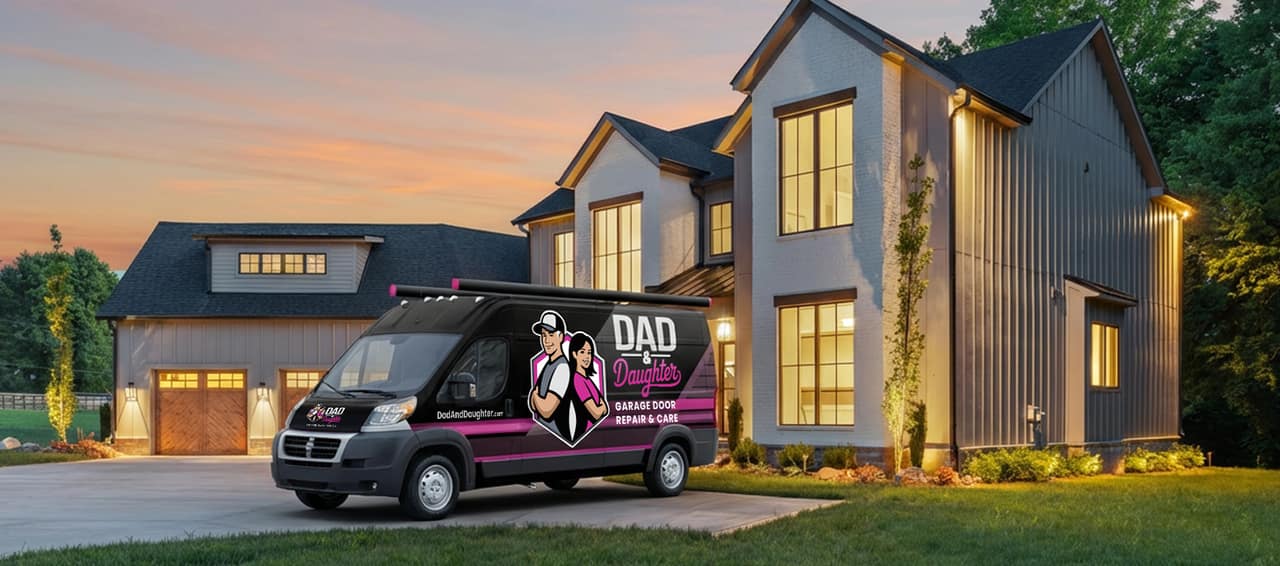
Carriage House Doors: Real Wood vs. Faux Wood Composites
Dad And Daughter Garage Door Service

Choosing between authentic cedar and steel-core overlays is a major exterior renovation decision. See how these materials actually hold up against late-summer heat and humidity.
Beyond the Showroom: The Realities of Carriage House Garage Doors
There is a persistent myth in exterior home design that when comparing Carriage House Doors: Real Wood vs. Faux Wood Composites, the synthetic options always look cheap, plastic, or distinctly unnatural. This misconception leads many homeowners to automatically default to natural wood without fully understanding what that material requires over the long haul. The reality is that modern manufacturing has completely transformed the composite landscape, making it harder than ever to tell the difference from the street.
Choosing between authentic cedar and steel-core composite overlays is one of the most significant decisions you will make during an exterior renovation. You are essentially weighing the timeless, high-end appeal of natural wood against the zero-maintenance benefits of modern engineering. Both materials look stunning on day one. However, evaluating these materials requires looking past the controlled environment of a showroom. At Dad & Daughter Garage Door Service, we always tell our customers they have to consider how these doors actually perform in real-world conditions, especially in neighborhoods across Brentwood TN where our local weather patterns put exterior materials to the ultimate test.
If you are planning to upgrade your home with new garage doors, you need a clear, objective look at the physical realities of both options. A beautiful door that requires constant upkeep or puts strain on your lifting mechanism quickly becomes a burden. By understanding the structural, aesthetic, and maintenance differences we see every day in the field, you can make a confident choice that enhances your home's curb appeal while fitting your lifestyle.
Aesthetic Authenticity: Natural Cedar vs. High-End Composites
When you evaluate the visual differences between natural wood and modern composites, you are looking at two different approaches to achieving curb appeal. Natural wood offers a traditional, organic beauty that has been the gold standard for carriage house designs for over a century. High-end composites, on the other hand, use advanced molding technology to replicate that exact look.
The visual profile of natural wood:
- Unrepeatable grain patterns: Authentic cedar, mahogany, and knotty alder feature unique grain structures. No two boards are exactly alike, giving your home a truly one-of-a-kind exterior.
- Rich staining capabilities: Natural wood absorbs stains deeply, allowing for a wide spectrum of rich, custom colors that can perfectly match your existing front door or exterior trim.
- Architectural depth: The way natural sunlight hits the physical grain and millwork of real wood creates a subtle, authentic shadow line that is highly prized in custom Brentwood TN architecture.
The visual profile of modern faux wood composites:
- Advanced molding techniques: Premium composite manufacturers do not just print a wood grain pattern onto steel. They cast silicone molds directly from actual, hand-selected wood boards. This transfers every knot, grain line, and texture into the composite material.
- Seamless replication: Once properly finished, these steel-core composite doors feature realistic textures that are virtually indistinguishable from natural wood, even from a few feet away.
- Consistent finishing: Composites take specialized paints and faux-stain finishes exceptionally well, providing a uniform look that resists fading under harsh UV exposure.
Matching your garage door material to your existing exterior trim and architectural style is vital. Whether you lean toward the organic variation of real cedar or the consistent perfection of a composite, seeing these materials in context helps clarify the choice. Reviewing a comprehensive garage door gallery can provide clear examples of how both materials integrate into high-end residential facades.
The Climate Factor: Surviving the Elements
The Problem: Heavy annual rainfall and fluctuating temperatures create a highly demanding environment for any exterior building material, but natural wood is particularly vulnerable. Middle Tennessee averages over 50 inches of rainfall annually. When you combine that relentless moisture with the intense August heat and humidity, you create the perfect storm for wood degradation.
The Cause: Natural wood is essentially a sponge. Its cellular structure is designed to absorb and release moisture. When exposed to continuous humidity or driving rain without a perfectly maintained seal, exterior wood begins to take on water. This causes the wood fibers to swell and expand. As the weather dries out and temperatures spike, the wood rapidly shrinks. This continuous cycle of expanding and contracting stresses the material, leading to warping, cracking, bowing, and eventually, rot. In late summer, when the humidity is at its peak, natural cedar doors are under immense environmental stress. If the protective sealant has worn thin, the moisture penetration accelerates rapidly.
The Solution: Over our years serving Brentwood homeowners, we have found that steel-core composite doors are engineered specifically to resist these environmental pressures. The underlying steel structure provides rigid stability, while the composite overlay is inherently moisture-resistant. These faux wood materials do not absorb water, meaning they do not swell during a rainy spring or crack during the brutal August heat and humidity. They remain dimensionally stable regardless of what the weather is doing outside. For homeowners who want the carriage house look without the climate-induced anxiety, composites offer a highly durable alternative that easily survives the elements.
Maintenance Realities: Time and Upkeep Commitments
The most significant difference between real wood and composite carriage doors is the long-term maintenance required to keep them viable. As a family-owned business, Dad & Daughter Garage Door Service believes in providing honest, transparent advice about the heavy maintenance commitments you are taking on before you make a high-end investment. We want you to love your door ten years from now just as much as you do on installation day.
Natural wood doors demand a strict, ongoing maintenance schedule to survive. If this routine is neglected, the door will quickly deteriorate.
The natural wood maintenance cycle:
- Annual inspections: The door requires close evaluation every year for signs of peeling, blistering, or fading in the topcoat.
- Surface preparation: Every one to two years, the door typically requires professional sanding to remove the degraded clear coat and prepare the wood fibers for new sealant.
- Refinishing and resealing: A high-quality, UV-resistant exterior marine-grade varnish or sealant must be applied. This process requires dry weather, proper ventilation, and significant drying time.
- Hardware checks: Because wood expands and contracts, the hinges and decorative hardware must be frequently checked and tightened by a technician.
In stark contrast, faux wood composite overlays offer a virtually zero-maintenance lifestyle. The maintenance routine for a high-end composite door generally consists of a simple wash-and-go approach. A quick rinse with a standard garden hose and a wipe down with a soft cloth and mild soap once or twice a year removes dust and pollen. There is no sanding, no staining, and no waiting for sealants to dry.
When comparing the two, you have to factor in the hidden long-term costs of neglected maintenance on natural wood doors. Hiring a professional to properly sand and reseal a custom wood door every other year adds significant ongoing effort to your home upkeep. If you are evaluating the total cost of ownership, looking into garage door financing can help you allocate your budget toward a premium composite system that eliminates these recurring maintenance headaches.
Hidden Structural Impacts: Weight and Opener Strain
While aesthetics and maintenance are highly visible factors, the physical performance differences between these materials have a profound impact on the entire garage door system. Your garage door does not operate in isolation; it is part of a complex lifting mechanism that relies on precise counterbalancing.
The Weight of Water
Natural wood is already a heavy material. A custom solid wood carriage door weighs significantly more than a standard steel door. However, the real issue arises when moisture absorption occurs. During periods of peak August heat and humidity, unsealed or poorly maintained wood acts like a sponge, pulling moisture directly from the air. This absorbed water significantly increases the physical weight of the door. A wood door can weigh substantially more in late summer than it does during a dry winter month.
The Strain on Springs and Openers
This fluctuating weight causes severe problems for your lifting hardware. Garage door torsion springs are calibrated to counterbalance a very specific amount of weight. When a wood door absorbs moisture and becomes heavier, the springs are suddenly under-calibrated for the load. This forces the automatic opener motor to work much harder to lift the door. As families are busy with the back-to-school transition in late summer, the last thing they need is a garage door emergency. Yet, this is exactly when our technicians see a spike in service calls for snapped springs or burnt-out motors due to water-logged wood doors.
The Stability of Steel-Core Composites
Steel-core faux wood composites provide consistent, lightweight durability. Because the material does not absorb moisture, the weight of the door remains exactly the same on a humid August afternoon as it does on a crisp November morning. This stable, predictable weight allows the torsion springs and the opener motor to operate exactly as designed, significantly prolonging the life of the entire lifting mechanism and reducing emergency repair calls.
Insulation and Efficiency: Comparing R-Values
Energy efficiency is another critical factor when choosing a carriage house door, particularly if your garage is attached to your home or sits below living spaces. The insulation capability of a garage door is measured by its R-value; the higher the number, the better the thermal resistance.
Natural wood possesses inherent insulating properties. Wood is a poor conductor of heat, which means a solid wood door provides a decent thermal barrier. However, the insulating capacity of solid wood is limited by its physical thickness. A standard wood carriage door generally achieves a moderate R-value, which is adequate but not exceptional for regulating extreme temperatures.
Steel-core composite doors typically achieve far superior R-values. These modern doors are constructed with a steel front and back skin, and the hollow cavity between them is injected with dense polyurethane insulation. This foam expands to fill every corner of the door panel, creating a highly effective thermal break. The faux wood overlay is then applied to the exterior steel skin.
This advanced construction method drastically improves the door's ability to regulate garage temperatures during peak summer heat. By keeping the intense Brentwood TN heat out of the garage during these end-of-season cooling months, a high R-value composite door helps lower the cooling load on the adjacent rooms in your house. Upgrading to a highly insulated door might even qualify you for generally applicable energy rebates or federal tax credits—though we always advise verifying current programs with your local utility provider or a tax professional. If you are building a new home and evaluating thermal efficiency, reviewing comprehensive garage door options for new construction will highlight just how much of a difference injected polyurethane makes compared to solid wood.
Side-by-Side Comparison: Which Material Wins?
To help you make a final decision, we have broken down the key differences between authentic cedar and steel-core faux wood composites into a scannable format. Both materials offer distinct advantages, but their performance in the demanding Brentwood TN climate varies significantly.
| Feature | Authentic Natural Wood | Faux Wood Composite (Steel-Core) |
|---|---|---|
| Authentic Look | Unmatched natural grain, unique organic variations, deep custom stain absorption. | Highly realistic molded textures, consistent finish, indistinguishable from the street. |
| Moisture Resistance | Low. Vulnerable to swelling, warping, and rot if sealants degrade in high humidity. | High. Impervious to moisture absorption, will not swell or rot. |
| Maintenance Frequency | High. Requires professional sanding, refinishing, and resealing every 1 to 2 years. | Low. Requires only a simple wash with mild soap and water once or twice a year. |
| System Impact (Weight) | High variance. Absorbs water weight, causing heavy strain on springs and motors. | Stable. Consistent weight prolongs the life of the opener and torsion springs. |
| Insulation (R-Value) | Moderate. Relies on the natural thickness of the wood panels. | High. Dense, injected polyurethane foam provides superior thermal resistance. |

Frequently Asked Questions About Carriage House Door Materials
Do composite garage doors look like real wood?
Yes, modern high-end composite doors look remarkably like real wood. Manufacturers use advanced silicone molds taken directly from actual wood boards to capture the exact grain patterns and textures. Once finished and installed, these faux wood overlays are generally indistinguishable from natural timber from the street.
How much maintenance does a real wood garage door need in a humid climate?
In a humid climate, a real wood garage door requires significant, ongoing maintenance. The finish must be inspected annually and professionally sanded and resealed every one to two years with a marine-grade varnish. This rigorous schedule is absolutely crucial to prevent moisture penetration, warping, and eventual rot.
Which garage door material is best for humid climates?
Steel-core faux wood composites are generally considered superior for areas with high humidity. Unlike natural wood, composite materials do not absorb moisture from the air, meaning they resist expansion and contraction. They deliver the classic carriage house aesthetic while requiring minimal upkeep in challenging weather conditions.
How long do wood garage doors last?
A high-quality wood garage door can last for decades, provided it is meticulously maintained. However, if the strict sealing schedules are ignored in wet or humid environments, the lifespan drops significantly. Without proper protection, natural wood will succumb to rot and structural failure much faster than synthetic alternatives.
Does moisture absorption make wood carriage doors too heavy for standard openers?
Yes, water weight can severely strain standard garage door motors. When unsealed wood absorbs moisture during periods of high August heat and humidity, the physical weight of the door fluctuates dramatically. This often requires the installation of heavy-duty springs and specialized, high-capacity openers to handle the increased load safely.
Making the Right Choice for Your Home Upgrade
Deciding between authentic cedar and modern composites comes down to balancing your desire for organic aesthetics with your tolerance for ongoing maintenance. Natural wood offers an undeniable, classic beauty, but it demands a strict commitment to upkeep to survive the local climate. Steel-core faux wood composites provide that same high-end carriage house look with the added benefits of zero maintenance, stable weight, and superior insulation.
Before you finalize your choice for a Brentwood TN home upgrade, it is vital to factor in these long-term weather realities. A garage door is a major investment, and it should enhance your daily life, not add to your chore list. Our team at Dad & Daughter Garage Door Service encourages you to schedule a professional consultation to view physical samples of both materials, discuss your specific architectural needs, and ensure you make a confident choice for your home's exterior.
Need Help?
Contact us today to discuss your needs. Our team is ready to help.
About the Author
Dad And Daughter Garage Door Service
More Articles
View All PostsRelated Articles

Home Maintenance Tips and Troubleshooting: Diagnosing Fall Garage Drafts
Read Article
Diagnosing Garage Door Stress: Fall Home Maintenance Tips and Troubleshooting
Read Article
How Long Does a Typical Garage Door Installation Actually Take?
Planning an early fall garage door replacement? Understand exactly what happens during the standard 3-to-4 hour installation window so you can schedule your day.
Read ArticleReady to Get Started?
Whether you need a repair, maintenance, or a new installation, our expert team is here to help.