How to Prevent Garage Door Breakdowns in 5 Simple Steps
Dad And Daughter Garage Door Service

Learn how to maintain your garage door to prevent unexpected breakdowns with this 5-step checklist for safe, reliable performance.
How to Prevent Garage Door Breakdowns in 5 Simple Steps
Why Most Garage Door Breakdowns Are Completely Preventable
If you want to know how to maintain your garage door to prevent unexpected breakdowns, here is the short answer: follow a simple routine of monthly inspections, twice-yearly lubrication, regular safety tests, balance checks, and seasonal weatherproofing.
The 5 core maintenance steps are:
- Perform a monthly visual inspection of tracks, rollers, cables, and hardware
- Test the auto-reverse and photo-eye safety features every month
- Lubricate hinges, rollers, and springs with silicone spray or white lithium grease twice a year
- Test door balance and tighten hardware every few months
- Protect your door from seasonal weather changes — especially heat, humidity, and cold
Most people never think about their garage door until it stops working. That is completely understandable — it opens, it closes, and life moves on. But here is the thing: your garage door is the largest moving part of your home, cycling open and closed roughly 1,500 times every year. All that repetition puts real stress on springs, cables, rollers, and tracks.
The good news? Research consistently shows that regular maintenance can prevent up to 80% of unexpected garage door breakdowns. A well-maintained door can last 15 to 30 years. One that is ignored often fails in 7 to 10. The difference almost always comes down to a few simple habits done on a consistent schedule — most of which take less than 30 minutes and require nothing more than basic household tools.
This guide walks you through exactly what to do, when to do it, and when to call a professional instead.
The 5-Step Garage Door Maintenance Checklist
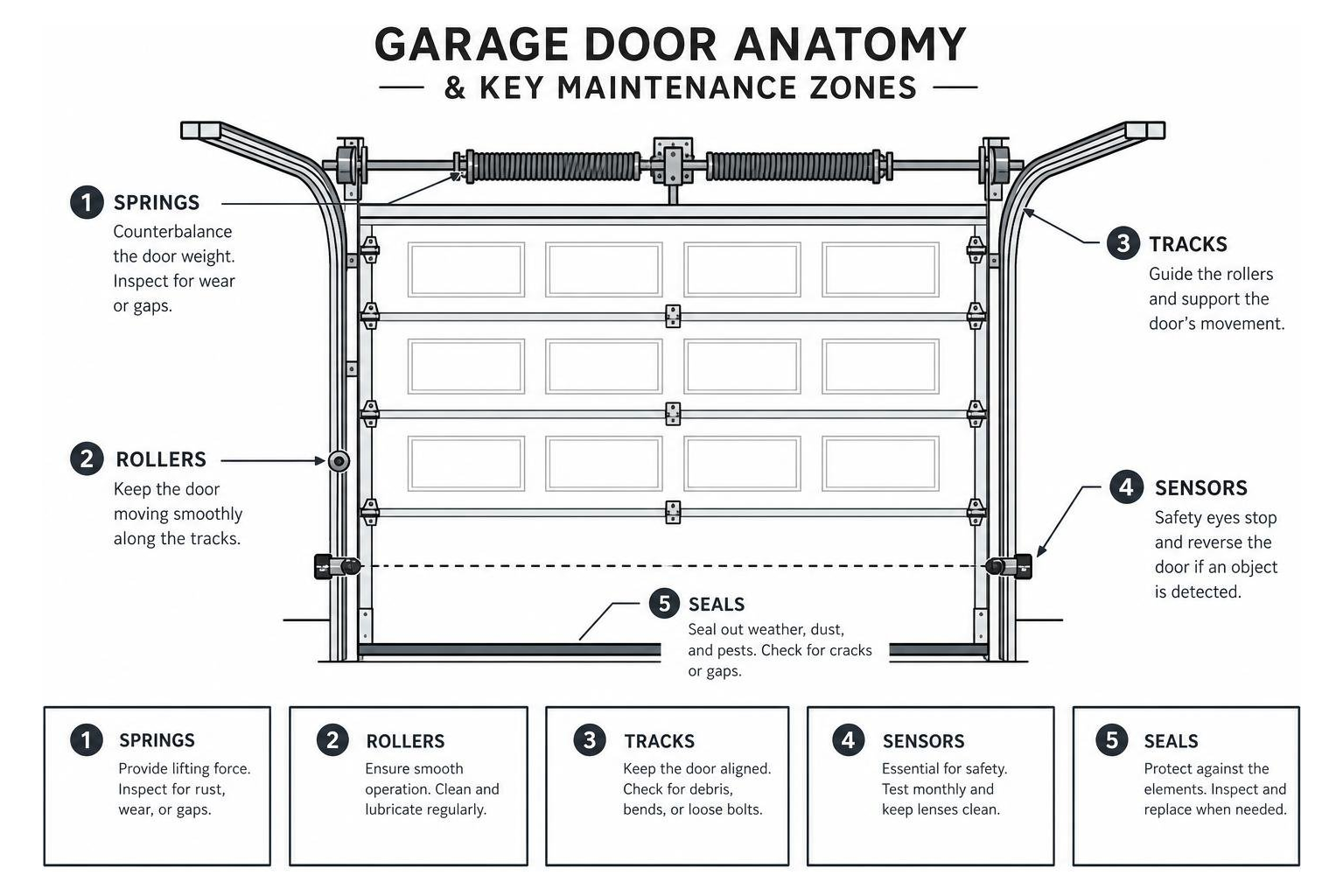
To make caring for your garage door as straightforward as possible, we have broken down the process into a repeatable, step-by-step preventive checklist. By separating tasks into monthly, quarterly, and annual intervals, you can easily keep your door operating safely and quietly without spending hours on weekend chores.
Establishing this routine is the single most effective strategy for homeowners looking to protect their investment. For more helpful resources on keeping your entire garage space in top shape, check out our collection of Garage Tips and Tricks.
Step 1: Perform Monthly Visual Inspections
The first step in how to maintain your garage door to prevent unexpected breakdowns is simply using your eyes and ears once a month. You do not need to be a mechanical genius to spot early warning signs of wear; you just need to know what to look for.
Start by standing inside your garage with the door fully closed. Take a close look at the following components:
- The Tracks: Inspect the vertical and horizontal tracks for dents, bends, or accumulated debris. The metal tracks should be completely straight and aligned.
- The Cables: Look at the high-tension lift cables running down the sides of the door. Check for any signs of fraying, loose strands, or corrosion.
- The Rollers: Examine the rollers that slide along the tracks. If you have standard plastic rollers, look for cracks or flat spots. If you have steel rollers, check for worn-out bearings.
- The Hardware: Look closely at the hinges connecting the door panels and the brackets mounting the tracks to the walls. Look for missing screws or loose bolts.
- The Panels and Weatherstripping: Check the panels for cracks or warping, and look at the bottom rubber weatherstripping to ensure it is not cracked, torn, or letting in drafts.
After your visual check, open the door using your automatic opener. Listen closely. A healthy garage door should operate with a steady, relatively quiet hum. If you hear loud grinding, squeaking, scraping, or slapping sounds, something is rubbing, misaligned, or desperately in need of lubrication.
Step 2: Test the Auto-Reverse and Photo-Eye Safety Features
Your garage door is a heavy piece of machinery, often weighing between 150 and 400 pounds. To prevent accidents, modern automatic openers are legally required to feature built-in safety mechanisms under UL 325 regulations. As of July 2026, safety standards require these systems to be fully functional to protect children, pets, and vehicles from entrapment. Testing these monthly is essential.
First, perform the Auto-Reverse Mechanical Test:
- Open your garage door completely.
- Place a solid object, like a flat 2×4 wood block, on the ground directly in the center of the door’s path.
- Press the button on your wall console or remote to close the door.
- When the bottom of the door strikes the wood block, it must automatically stop and reverse back to the fully open position within two seconds.
If the door strikes the block, hesitates, and keeps pressing down, your opener’s travel limits or force settings need immediate adjustment.
Next, perform the Photo-Eye Sensor Test:
- Open the door completely.
- Locate the two small infrared photo-eye sensors mounted on brackets about six inches off the ground on either side of the door opening.
- Press the button to close the door.
- As the door is closing, wave a long object (like a broom handle) through the invisible path between the two sensors.
- The door should instantly stop and reverse to the open position, and the opener light will usually flash.
If your door fails either of these safety tests, do not ignore it. To make sure you do not miss any other crucial safety checks, consult our Ultimate Checklist for Garage Door Safety Features.
Step 3: Keep Moving Parts Properly Lubricated
Friction is the ultimate enemy of mechanical parts. When metal rubs against metal without protection, it creates heat, accelerates wear, and places a massive burden on your opener’s motor. Keeping your door’s moving parts properly lubricated twice a year—ideally once in the spring and once in the fall—can prevent up to 80% of unexpected mechanical failures.
The Golden Rule of Garage Door Lubrication: Never use WD-40. While WD-40 is a fantastic product for breaking rust loose, it is a degreaser, not a true lubricant. It will quickly evaporate, strip away any existing grease, and attract dust and dirt that turns into a sticky, abrasive paste. Instead, always use a high-quality silicone-based spray lubricant or white lithium grease.
When applying lubricant, target these key areas:
- Hinges: Spray the pivot points where the metal hinges bend as the door opens.
- Roller Stems: Apply lubricant to the metal stems that slide into the hinges. If you have steel rollers with exposed ball bearings, apply a quick squirt directly to the bearings. Do not lubricate plastic rollers without bearings.
- Torsion Springs: Lightly spray the entire length of the overhead torsion springs. This reduces friction between the coils as they wind and unwind, preventing rust and quietening the door.
For a detailed, step-by-step breakdown of how to handle this task cleanly, check out our guide on How to Lubricate Garage Door Springs, Rollers & Hinges Correctly.
Step 4: Test Door Balance and Hardware Tightness
An unbalanced garage door is the number one killer of automatic garage door openers. Your garage door opener is only designed to guide and regulate the door’s movement; the heavy lifting is actually performed by the counterbalancing springs. If the door is out of balance, the opener has to pull hundreds of pounds of dead weight, leading to stripped gears, burnt-out motors, and sudden system failures.
To test your door’s balance:
- Close the door completely.
- Disconnect the automatic opener by pulling the red emergency release cord.
- Manually lift the door by hand. It should open smoothly with minimal resistance.
- Lift the door to approximately waist height (about 3 to 4 feet off the ground) and carefully let go.
If the door is perfectly balanced, it should hover in place, or at most drift slightly. If the door immediately slams shut, your springs have lost tension and are worn out. If the door violently shoots upward, the spring tension is too high. Both scenarios place dangerous stress on your system and require professional calibration.
While the door is disconnected, take a socket wrench and check the tightness of all mounting bolts, track brackets, and hinge fasteners. The daily vibration of the door opening and closing can slowly back these screws out over time. Tighten them firmly, but be careful not to over-tighten and strip the metal threads. For residents in our southern service areas, you can learn more about what to expect during a professional inspection in our guide on Garage Door Service Expectations Spring Hill TN.
Step 5: Protect Your Door from Seasonal Weather Changes
Living in Tennessee means our homes have to deal with a wide variety of weather extremes. From the high humidity and blistering summer heat in places like Hendersonville and Mt. Juliet to freezing winter mornings in Knoxville and Chattanooga, these rapid temperature shifts put heavy physical stress on your garage door.
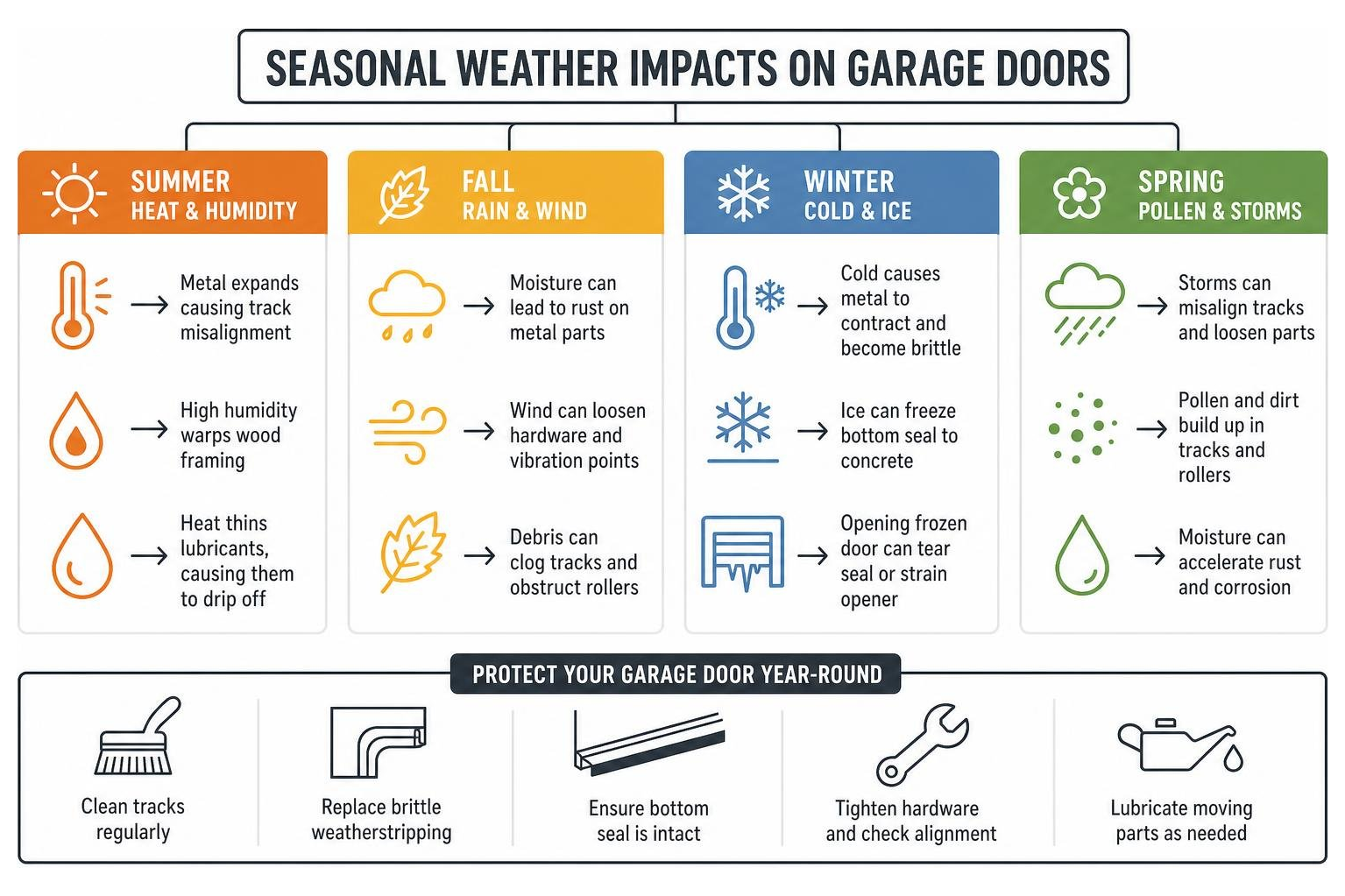
- Summer Heat and Humidity: Intense summer heat causes the metal tracks and panels to expand slightly. This expansion can cause misalignments, while high humidity can warp the wooden framing surrounding your garage opening. When the wood shifts, it can pull the metal tracks out of line, causing the door to bind or jam. Furthermore, extreme heat thins out lubricants, causing them to drip off and leave your components dry.
- Winter Freezing: Cold winter temperatures cause metal to contract, making components brittle. Additionally, moisture can pool at the base of your door and freeze, sticking the bottom rubber seal to the concrete floor. If you try to open the door when it is frozen shut, you risk tearing the bottom seal or burning out your opener’s motor.
To protect your door, clean the tracks regularly, replace brittle weatherstripping, and ensure your bottom seal is intact before the first winter freeze. For more tips on preparing your system for local weather shifts, read our Garage Door Service Tips Hendersonville TN.
How to Maintain Your Garage Door to Prevent Unexpected Breakdowns: DIY vs. Professional Care
Taking a proactive approach to your garage door’s health is a smart, budget-friendly move. However, understanding your limits is crucial for your personal safety. While basic visual checks and lubrication are perfect weekend DIY projects, high-tension zones—such as the springs, cables, and bottom brackets—can be incredibly dangerous to handle without specialized training and tools.
For a comprehensive look at long-term garage door health, explore our dedicated section on Garage Maintenance.
How to Maintain Your Garage Door to Prevent Unexpected Breakdowns with Visual Checks
A thorough visual inspection is the foundation of any good maintenance routine. As a homeowner, you can easily spot early warning signs of mechanical wear before they escalate into an expensive emergency repair.
Every month, take a few minutes to clean out any dirt, leaves, or hardened grease from the metal tracks using a damp cloth or a mild household cleaner. Check the rollers for signs of flattening or cracking. Nylon rollers with sealed ball bearings are highly recommended because they operate quietly and can last up to 15 to 20 years, compared to cheap plastic rollers that often fail after just a few years.
If you notice minor issues, like a loose hinge bolt or a small tear in the side weatherstripping, you can easily tighten the bolt or slide in a replacement seal yourself. If you are located in Sumner County, you can find localized maintenance advice in our guide on Garage Door Repair Tips Gallatin TN.
How to Maintain Your Garage Door to Prevent Unexpected Breakdowns through Lubrication
Regular lubrication is the simplest, most effective way to extend the lifespan of your garage door. By applying a light, even coat of silicone spray or white lithium grease to the moving parts every six months, you reduce friction, quieten noisy operation, and prevent rust from forming on metal surfaces.
Always wipe away any excess lubricant with a clean rag to prevent drips on your garage floor or car. Remember: do not lubricate the inside of the tracks. While it might seem like a good idea, grease inside the tracks will collect dust, pet hair, and debris, eventually creating a sticky sludge that causes the rollers to slide rather than roll. Instead, simply wipe the tracks clean with a dry cloth or use a bit of brake cleaner to dissolve old residue. If you want to learn more about diagnosing and fixing noisy components, check out our resources on Garage Door Repair.
Safe DIY Tasks vs. Dangerous Professional Repairs
To keep yourself and your family safe, it is helpful to have a clear boundary between what you can do yourself and what must be left to a trained professional.
The spring system and lift cables are under extreme mechanical tension. Torsion springs perform 95% of the lifting work for your heavy garage door, storing immense energy. If a spring snaps or a cable slips while you are trying to adjust it, it can cause severe, life-threatening injuries or massive property damage.
The table below outlines which tasks are safe for homeowners to perform and which require a professional:
| Maintenance Task | DIY Safe? | Requires Professional? | Why? |
|---|---|---|---|
| Visual Inspection & Track Cleaning | Yes | No | Safe, simple visual and cleaning tasks. |
| Component Lubrication | Yes | No | Safe to perform using silicone spray or lithium grease. |
| Safety Feature Testing (2×4 & Photo-Eye) | Yes | No | Safe tests to verify operational safety. |
| Tightening Loose Hinge & Bracket Bolts | Yes | No | Simple hand-tool task; do not touch red-painted bolts. |
| Replacing Weatherstripping & Bottom Seals | Yes | No | Straightforward replacement that improves efficiency. |
| Torsion or Extension Spring Replacement | No | Yes | Extreme tension; high risk of severe injury. |
| Lift Cable Replacement or Adjustment | No | Yes | Cables carry the full weight of the door under high tension. |
| Track Realignment & Structural Balancing | No | Yes | Improper alignment can cause the door to fall off the tracks. |
| Opener Motor Repair & Internal Calibration | No | Yes | Electrical hazards and precise mechanical adjustments. |
If your monthly inspection reveals a frayed cable, a gap in your torsion spring, or a door that fails its balance test, do not attempt to fix it yourself. For homeowners in the Gallatin area, you can learn more about professional repair standards in our Garage Door Service Guide Gallatin TN.
Frequently Asked Questions About Garage Door Maintenance
How often should I lubricate my garage door components?
We recommend lubricating your garage door’s moving parts twice a year: once in the spring and once in the fall. Applying lubricant before the summer heat prevents the oil from thinning out, while a fall application protects the metal parts from contracting and becoming brittle during cold winter mornings.
If you live in an area with high humidity, a third application in mid-summer can help prevent rust. Always use a silicone-based spray or white lithium grease, and avoid WD-40. To learn more about seasonal maintenance schedules in Williamson and southern Davidson counties, read our guide on Garage Door Service Maintenance Thompsons Station TN.
What are the warning signs that my garage door is about to fail?
Fortunately, garage doors rarely fail without warning. Most breakdowns are the result of minor, gradual wear that goes unnoticed. Watch out for these common warning signs:
- Grinding or Scraping Noises: This usually indicates dry hinges, worn-out steel rollers, or misaligned tracks.
- Slow or Jerky Operation: If your door hesitates, shakes, or takes much longer to open than usual, your opener is likely struggling against an unbalanced door or worn springs.
- Uneven Hanging: If one side of the door hangs lower than the other when partially open, you likely have a stretched extension spring or a slipping lift cable.
- The “Firecracker” Bang: If you hear a sudden, incredibly loud bang from your garage while the door is closed, your torsion spring has likely snapped.
- Opener Struggles: If the motor hums loudly but the door barely moves, or if it opens a few inches and then reverses, the spring system is no longer supporting the door’s weight.
Can I adjust or replace my own garage door springs?
No. You should never attempt to adjust, repair, or replace your own garage door springs. Standard torsion springs are wound under extreme tension and hold enough stored energy to cause devastating injuries.
Professional technicians have specialized winding bars, heavy-duty clamps, and extensive safety training to replace these components safely. Additionally, springs must be precisely calibrated to match the exact weight and height of your specific door. Installing the wrong size spring can ruin your opener or cause the door to fall unexpectedly. Always call a licensed professional for any spring-related issues.
Conclusion
Taking care of your garage door does not require a massive investment of time or money. By following this simple 5-step checklist—performing visual inspections, testing safety features, lubricating moving parts, checking balance, and protecting against seasonal weather—you can prevent up to 80% of unexpected breakdowns, keep your family safe, and add years to the lifespan of your door and opener.
When your door requires professional attention, you want a team you can trust. Dad & Daughter Garage Door Repair is a family-owned and locally operated company serving the Nashville area since 1996. Unlike many modern service companies, we operate without private equity backing. This means our focus remains exactly where it belongs: on honest customer care, consistent service, and treating your family like our own.
Whether you are in Smyrna, Old Hickory, Nolensville, Mt. Juliet, Lebanon, La Vergne, Bellevue, Thompson’s Station, Spring Hill, Nashville, Murfreesboro, Knoxville, Hendersonville, Gallatin, Franklin, Chattanooga, or Brentwood, we are here to help.
Don’t wait for an unexpected breakdown to leave your car trapped inside. Schedule your professional garage door maintenance with Dad & Daughter Garage Door Repair today and enjoy true peace of mind all year long!
Need Help?
Contact us today to discuss your needs. Our team is ready to help.
About the Author
Dad And Daughter Garage Door Service
More Articles
View All PostsRelated Articles

Why Nashville Building Codes Dictate Specific Wind Load Ratings
An unbraced garage door is the largest structural vulnerability during severe weather. See exactly what local inspectors look for to ensure your new build meets current wind load requirements.
Read Article
The Cost Difference Between Stamped Steel and Custom Wood Doors
Choosing between custom wood and steel means looking past the initial estimate. Understand the lifetime maintenance realities of each material before your next exterior upgrade.
Read Article
Preparing Your Commercial Warehouse Doors for Winter Deliveries
September is the critical window to secure your loading docks before freezing temperatures cause mechanical failures. Learn how to address degraded hardware and protect your Q4 shipping schedule.
Read ArticleReady to Get Started?
Whether you need a repair, maintenance, or a new installation, our expert team is here to help.